
Can Polyaspartic Floor Coating Really Be Done in One Day? Find Out Here
If you've been researching garage floor coating options, you've probably come across a claim that sounds almost too good to be true: polyaspartic floor coatings can be installed in just one day.
For busy homeowners and business owners alike, this is music to the ears. Who wants to give up their garage for a week while waiting for traditional coatings to cure? But here's the million-dollar question, is a one-day installation actually possible, and more importantly, does cutting the timeline mean cutting corners on quality?
Let's dive into the facts and find out what's really going on with polyaspartic floor coatings.
What Exactly Is Polyaspartic Floor Coating?
Before we talk timelines, let's make sure we're on the same page about what polyaspartic coating actually is.
Polyaspartic is a type of aliphatic polyurea, a high-performance coating technology that was specifically formulated to slow down the curing time of pure polyureas (which cure in mere seconds) to allow for easier application with rollers and squeegees. The result? A coating that cures significantly faster than traditional epoxy but still gives installers enough working time to apply it properly.
Think of it as the Goldilocks of floor coatings: not too fast, not too slow, but just right for efficient professional installation.
How Does One-Day Installation Actually Work?
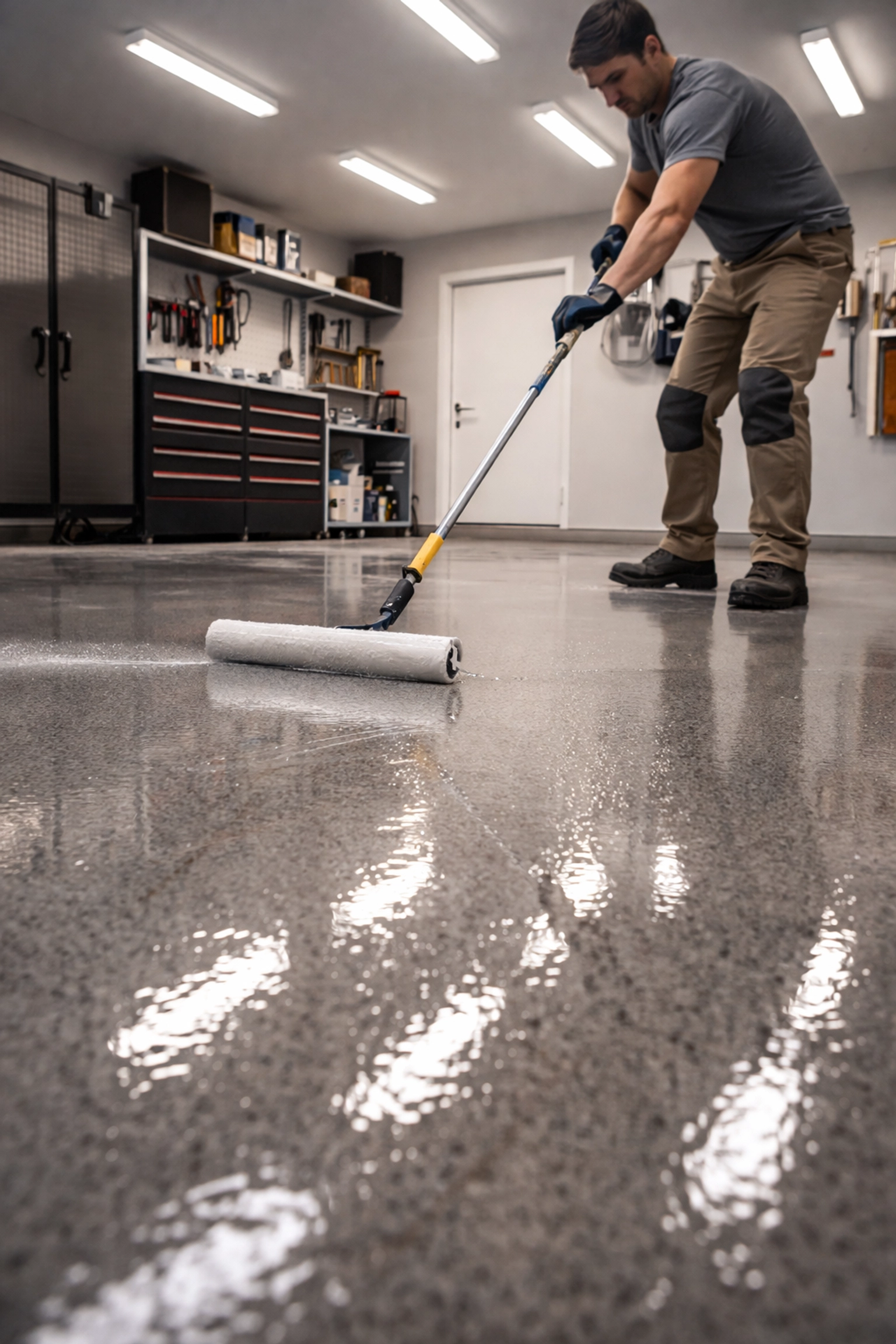
Here's where things get interesting. A typical polyaspartic floor coating system consists of three main layers:
Primer coat – This first layer bonds directly to your prepared concrete surface
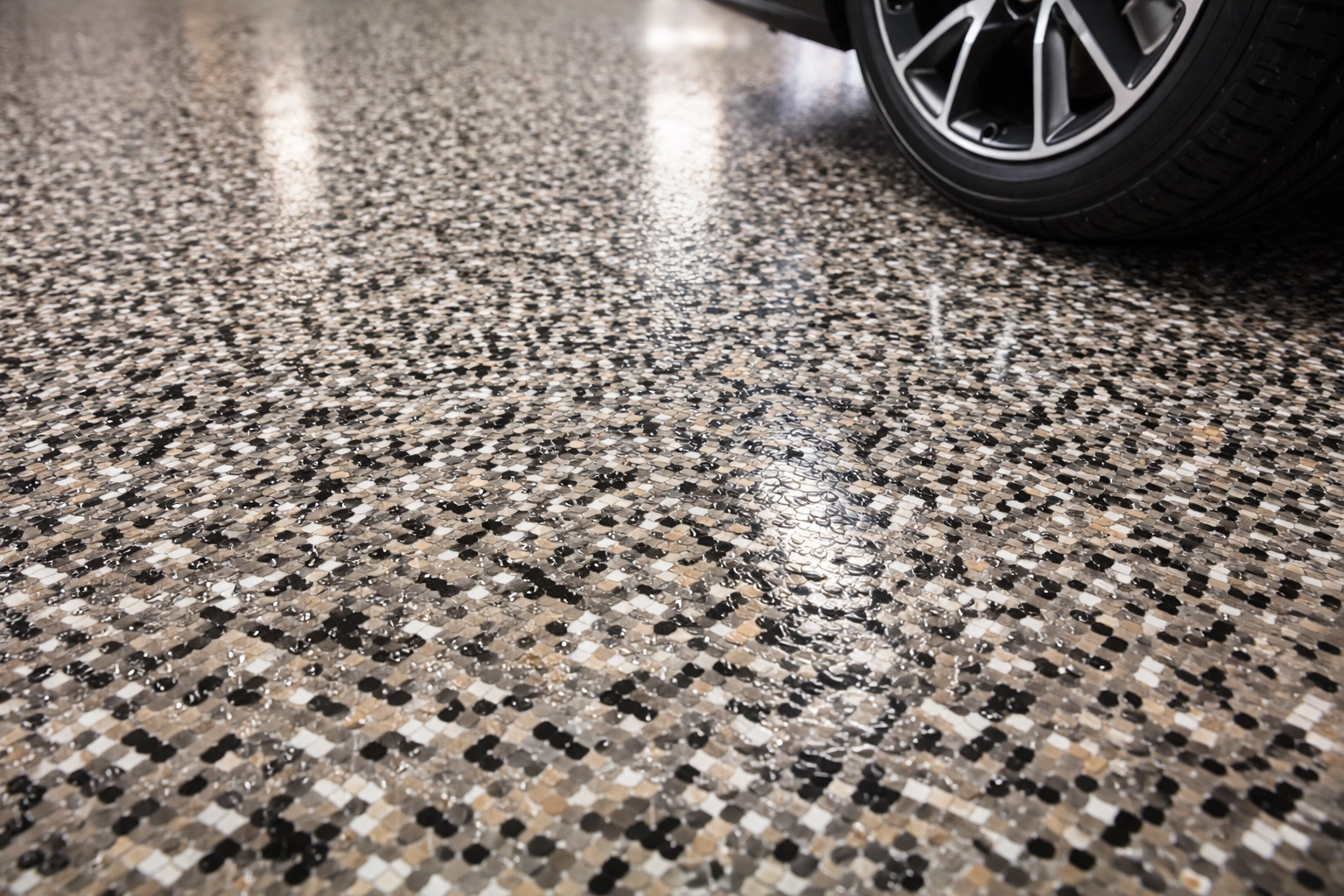
Decorative flake broadcast – Those beautiful color chips that give your floor its signature look
Clear topcoat – The protective layer that seals everything in and provides durability
The magic of polyaspartic is in its cure time. While each layer becomes firm within approximately 40 minutes, installers can move from one step to the next without the lengthy waiting periods required by other coating types. This rapid turnaround is what makes same-day completion possible.
Compare this to a traditional epoxy floor installation, which typically requires 12-24 hours of cure time between coats. That means a multi-layer epoxy system can easily take 3-5 days to complete, and that's before you can even think about parking your car on it.
Polyaspartic vs. Epoxy: The Real Comparison
Let's break down how these two popular options stack up when it comes to installation time:
Factor | Polyaspartic | Traditional Epoxy |
Cure time between coats | 40-60 minutes | 12-24 hours |
Total installation time | 1 day | 3-5 days |
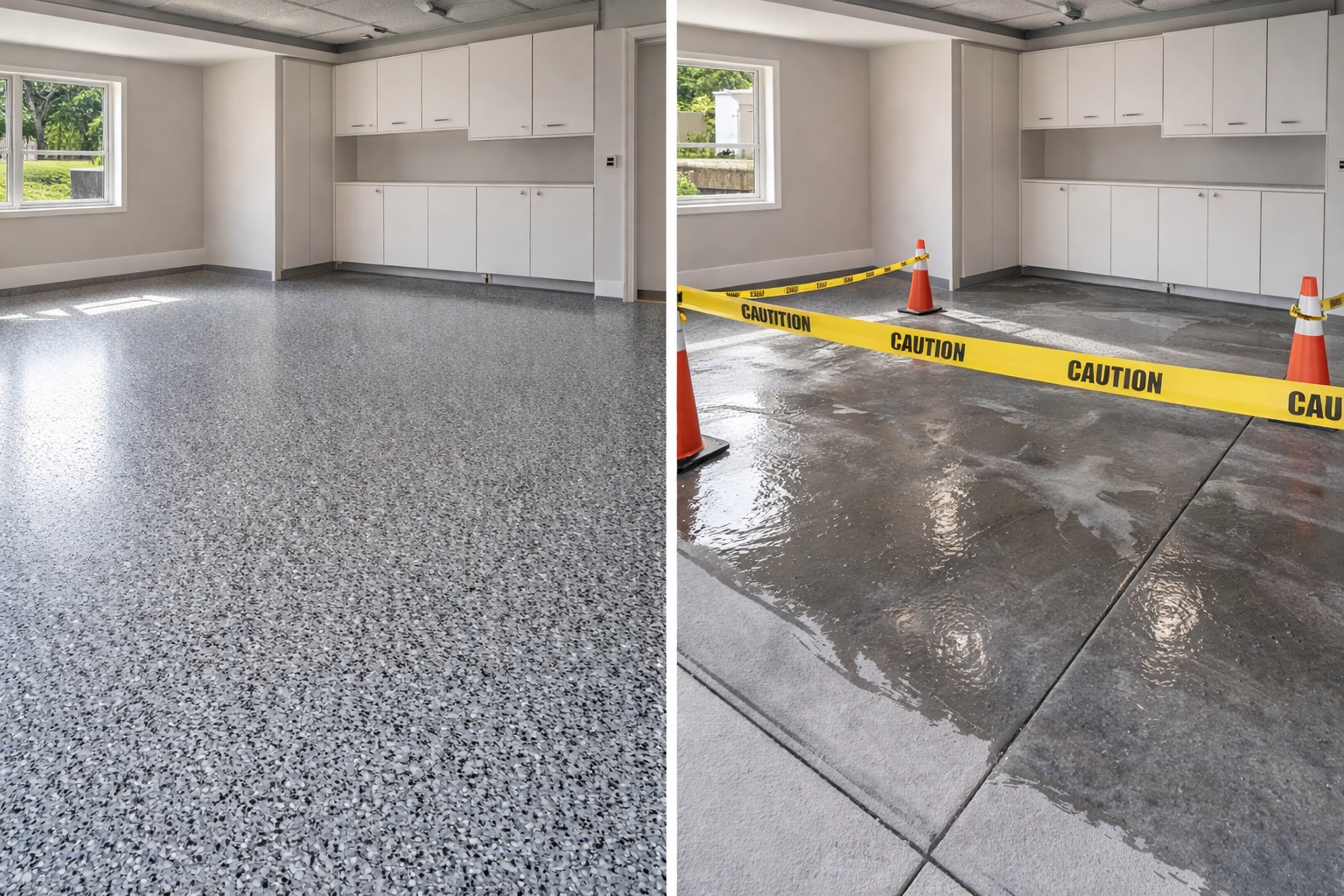
Return to service | 24 hours | 5-7 days |
Temperature sensitivity | Works in wide range | Requires moderate temps |
The time savings are dramatic, but that doesn't mean polyaspartic is automatically the better choice for every situation. Both coatings have their strengths, and the right choice depends on your specific needs.
For a deeper dive into how these two options compare, check out our post on Polyaspartic vs. Epoxy Floor Coating: Which Is Better for Your Garage?
The Benefits of Choosing Polyaspartic Floor Coating
Beyond the fast installation, polyaspartic coatings bring several advantages to the table:
UV Stability
Unlike some epoxy formulations that can yellow over time when exposed to sunlight, polyaspartic coatings are UV stable. This makes them an excellent choice for garages with windows or any space that gets natural light.
Flexibility and Durability
Polyaspartic coatings remain slightly flexible after curing, which helps them resist cracking from concrete movement and temperature fluctuations. They're also highly resistant to chemicals, hot tire pickup, and abrasion.
All-Weather Application
Need your garage floor coated in the middle of winter or during a humid summer? Polyaspartic coatings can be applied in a much wider range of temperatures and humidity levels than traditional epoxy, giving you more flexibility on scheduling.
Minimal Disruption
For homeowners, getting your garage back in 24 hours instead of a week is a game-changer. For commercial properties, reduced downtime means less impact on your business operations.
The Honest Truth About One-Day Installations
Now, here's where we need to get real with you. While one-day polyaspartic installations are absolutely possible, the quality of the finished product depends heavily on how the job is executed.
The Potential Pitfalls
Concrete penetration concerns: Because polyaspartic coatings cure so quickly, they don't have as much time to soak into and bond with the concrete surface compared to slower-curing epoxies. Epoxy can take 5-20 times longer to cure, allowing it to penetrate prepared concrete more thoroughly.
Inter-coat adhesion: The rapid curing between layers creates a narrow window for proper bonding. If an installer rushes through the process or doesn't time the applications correctly, you could end up with delamination issues down the road, especially when your floor is subjected to stress like hot tires.
Climate matters: In humid regions, polyaspartic coatings cure even faster, which can make one-day installations trickier to execute properly. Dry climates are generally more forgiving.
When Does One-Day Installation Make Sense?
One-day polyaspartic installations work best when:
Proper preparation is prioritized – Surface prep is non-negotiable. Diamond grinding or shot blasting to properly profile the concrete is essential for adhesion.
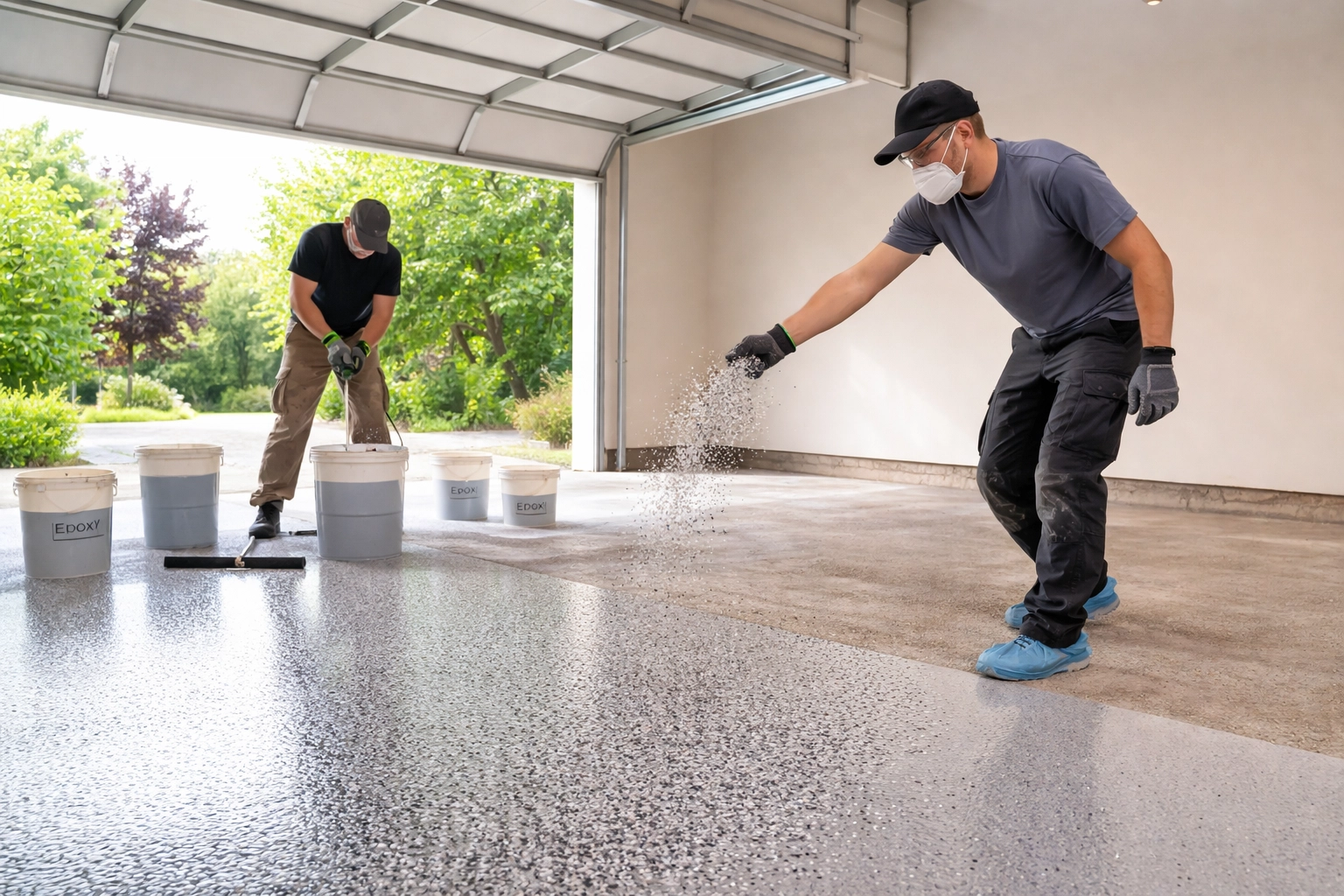
Adequate manpower and equipment – Having the right team size and professional-grade tools ensures each step is completed within the optimal window.
Climate conditions are favorable – Moderate humidity and temperature make for smoother applications.
You're working with experienced professionals – This isn't a job for weekend warriors or inexperienced crews.
For homeowners who don't have urgent timelines, a hybrid approach can offer the best of both worlds. This method uses an epoxy base coat (which requires about 1.5 hours to set and provides better concrete penetration) followed by polyaspartic layers. The result is a floor that can still be completed in one day while enjoying the deep bonding benefits of epoxy.
Why Professional Installation Matters
We can't stress this enough: the success of a one-day polyaspartic installation comes down to professional execution. The narrow timing windows, the importance of proper surface preparation, and the technical know-how required to achieve lasting results, these aren't things you can learn from a YouTube video.
At Madison Coatings Company, we've refined our polyaspartic installation process to deliver beautiful, durable floors without sacrificing quality for speed. Our team understands the science behind these coatings and knows exactly how to work within the curing windows to ensure proper adhesion and long-term performance.
Wondering whether DIY is worth the risk? We break it down in our post on DIY vs. Professional Floor Coating.
The Bottom Line
So, can polyaspartic floor coating really be done in one day? Yes, absolutely. But the real question isn't whether it can be done: it's whether it should be done, and more importantly, whether it's being done right.
When executed by experienced professionals with proper preparation, equipment, and timing, a one-day polyaspartic garage floor coating can give you a stunning, durable surface that will last for years. When rushed or done incorrectly, that same one-day timeline can lead to adhesion failures and costly repairs.
The takeaway? Don't just ask how fast a coating can be installed. Ask how well it will be installed.
Ready to Transform Your Floor?
At Madison Coatings Company, we specialize in professional polyaspartic and epoxy floor installations that are built to last. Whether you need a quick turnaround for your garage or a comprehensive solution for your commercial space, our team has the expertise to get the job done right.
Want to see what's possible? Browse our project gallery for inspiration, or contact us today to schedule your free consultation. Let's get your floor looking incredible( without the wait.)