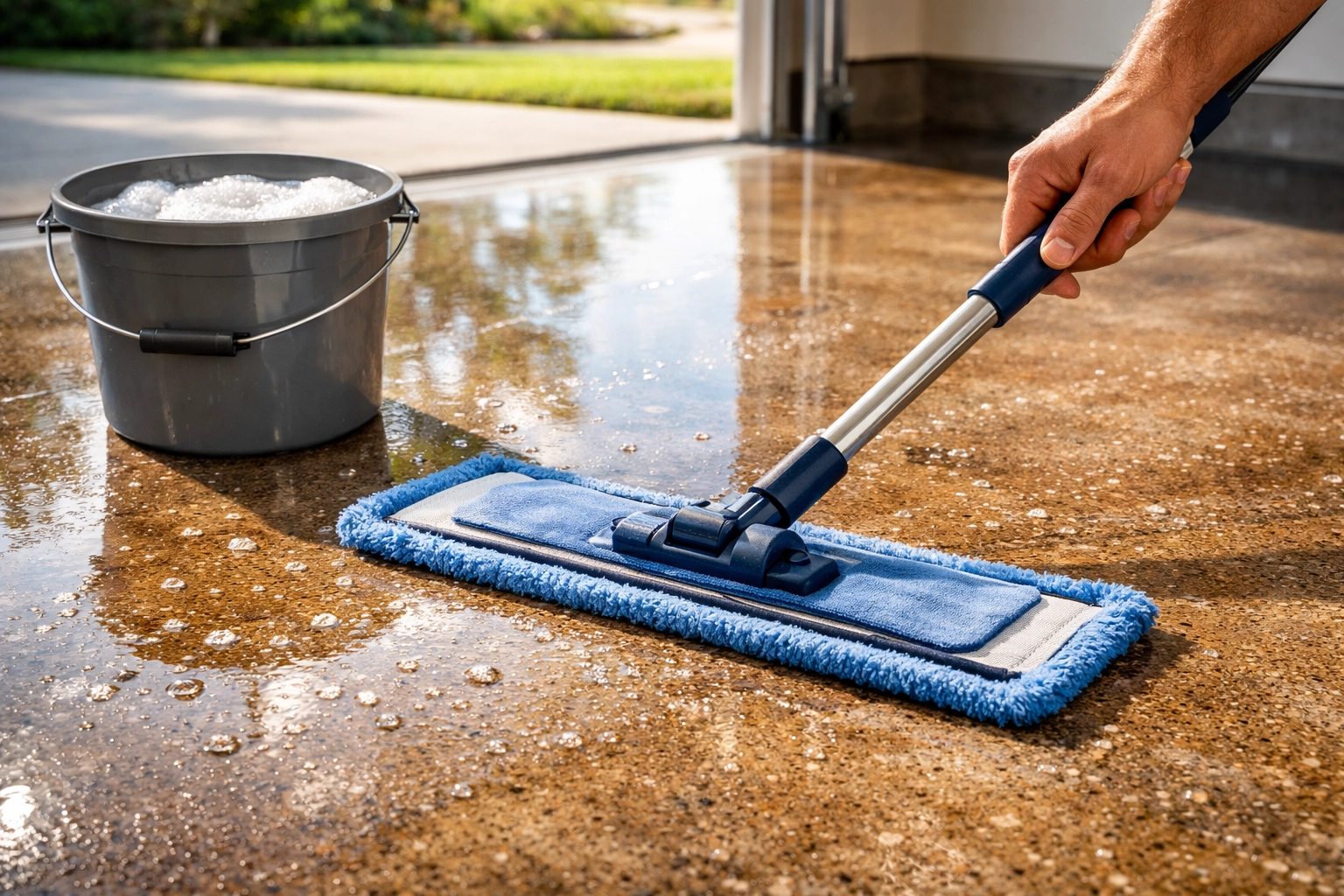
Does Mississippi Humidity Actually Destroy Your Residential Garage Epoxy? Here's the Truth
If you've been thinking about coating your garage floor in Madison, Brandon, or Jackson, you've probably heard the horror stories. "Don't waste your money on epoxy: the humidity will just make it bubble up and peel off in six months."
Sounds scary, right? But here's the thing: Mississippi humidity doesn't destroy properly installed garage floor coatings. Not even close.
Let's break down what's actually happening, why some garage floors fail in our climate, and what separates a professional installation from a weekend DIY disaster.
The Real Story Behind Epoxy and Humidity
Mississippi's humid subtropical climate isn't exactly a secret. We're talking average relative humidity levels between 70-90% depending on the season. July mornings in Jackson can feel like you're breathing through a wet towel.
But here's what most homeowners don't realize: quality epoxy coatings are designed to handle moisture. Professional-grade epoxy creates a non-porous barrier that actually protects your concrete from water damage. It's not the humidity in the air that's the problem: it's moisture trapped under the coating during installation.
When you see a garage floor coating bubble, peel, or delaminate, it's almost always due to one of three culprits:
Poor surface preparation (skipping the critical grinding and cleaning steps)
Moisture in the concrete slab that wasn't properly tested before installation
Low-quality DIY kits that simply can't stand up to real-world conditions
The humidity outside? That's not what's ruining floors. It's what's happening inside the concrete that matters.
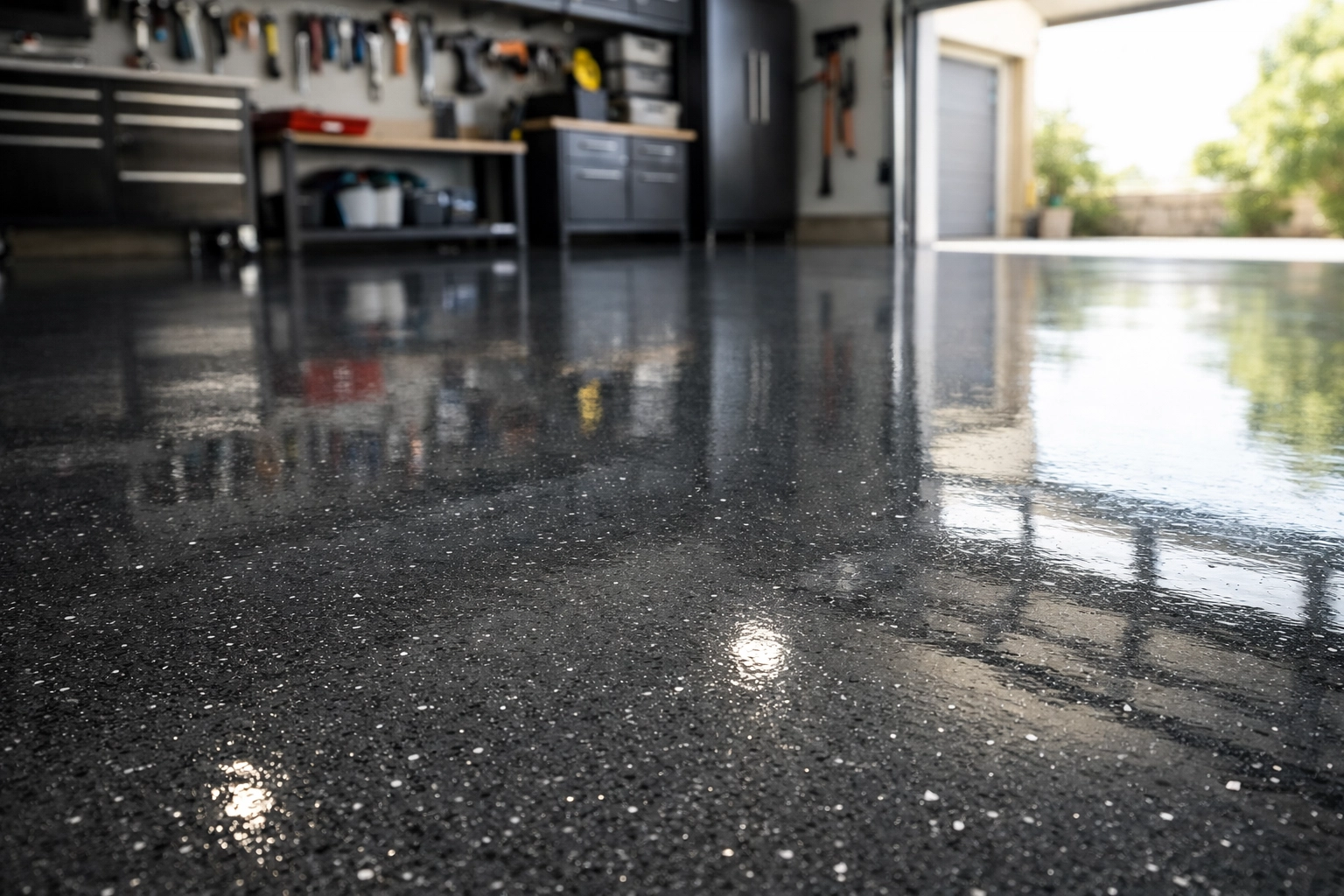
Why Moisture Testing Is Non-Negotiable in Central Mississippi
Here's where most DIY garage floor projects go sideways. You grab a kit from the big box store, watch a YouTube video, and think you're ready to go. But that concrete slab in your Brandon garage? It's not just sitting there being dry and cooperative.
Concrete is porous. It breathes. And in Mississippi's climate, it can hold a surprising amount of moisture: even if it looks and feels completely dry to the touch.
Professional moisture testing uses specialized equipment to measure the relative humidity levels inside your concrete slab. According to industry standards, professional-grade epoxy can typically tolerate concrete moisture up to 75% relative humidity: but only if the surface has been properly prepared.
Skip this step, and you're basically trapping moisture under your coating. As temperatures fluctuate and that moisture tries to escape, it creates pressure under the epoxy. That pressure leads to bubbling, delamination, and eventually complete coating failure.
At Madison Coatings Company, we perform comprehensive moisture testing before every residential garage installation. It's not an upsell or an optional add-on: it's a requirement. Because we're not interested in callbacks or disappointed customers. We want your garage floor to look amazing in five years, not just five months.
The Professional Installation Process That Actually Works
So what does a proper garage floor coating installation look like in Mississippi's humid climate? Let's walk through it.
Step 1: Diamond Grinding Surface Prep
We don't just sweep your floor and call it clean. Professional diamond grinding opens up the concrete pores, removes any existing coatings or sealers, and creates the proper profile for maximum adhesion. This step alone makes a massive difference in how well the coating bonds to your slab.
Step 2: Crack and Joint Repair
Mississippi foundations move. Clay soil, temperature swings, and settling all create cracks over time. We fill and repair these imperfections with flexible polyurea crack filler that moves with your concrete instead of against it.
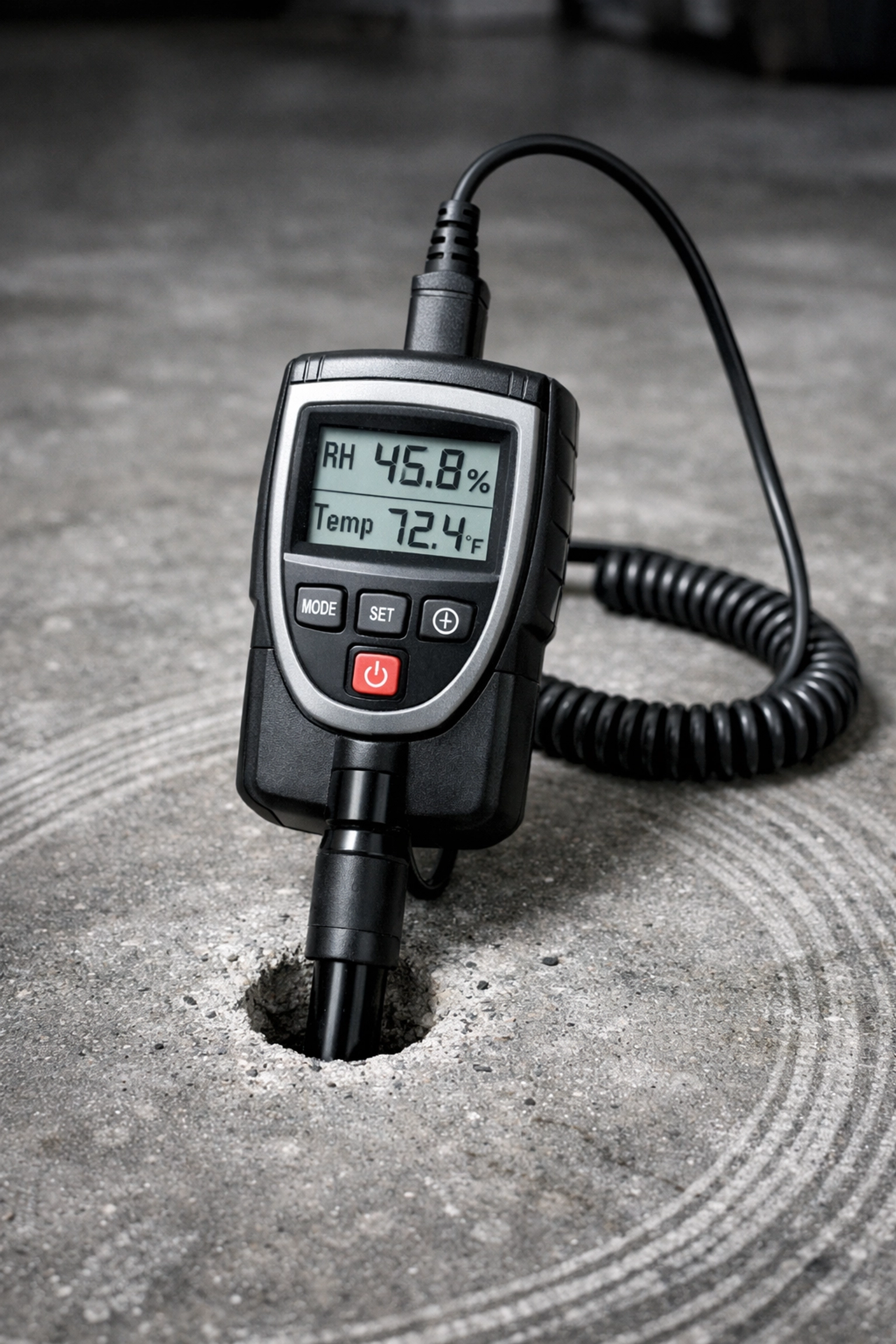
Step 3: Moisture Testing and Mitigation
Remember that moisture testing we talked about? This is where it happens. If we detect elevated moisture levels, we can apply moisture mitigation primers that create a vapor barrier between the concrete and the coating system. Problem solved before it starts.
Step 4: Professional-Grade Coating Application
Here's where quality materials make all the difference. Big box store epoxy kits typically have 20-30% solids content. Our professional coatings? 100% solids. That means you're getting actual coating material, not a bunch of filler and water that evaporates away.
We apply multiple layers: a base coat, optional color flakes for texture and style, and a durable topcoat that seals everything in. Each layer is applied at the right temperature, with proper cure times, and in controlled conditions.
Why Polyaspartic Might Be Even Better for Mississippi Garages
While properly installed epoxy works great in our climate, there's an even better option for Madison and Jackson area homeowners: polyaspartic floor coatings.
Polyaspartic coatings take everything good about epoxy and turn it up a notch. They're more flexible, which means they handle Mississippi's temperature swings better. They cure faster: often in just one day: so you're not losing your garage for a whole weekend. And they're more UV-stable, so they won't yellow over time if you get direct sunlight through your garage door.
The flexibility factor is huge here. When temperatures swing from 40°F on a January morning to 95°F by July afternoon, your concrete slab expands and contracts. Polyaspartic's flexibility lets it move with the concrete instead of cracking under stress.
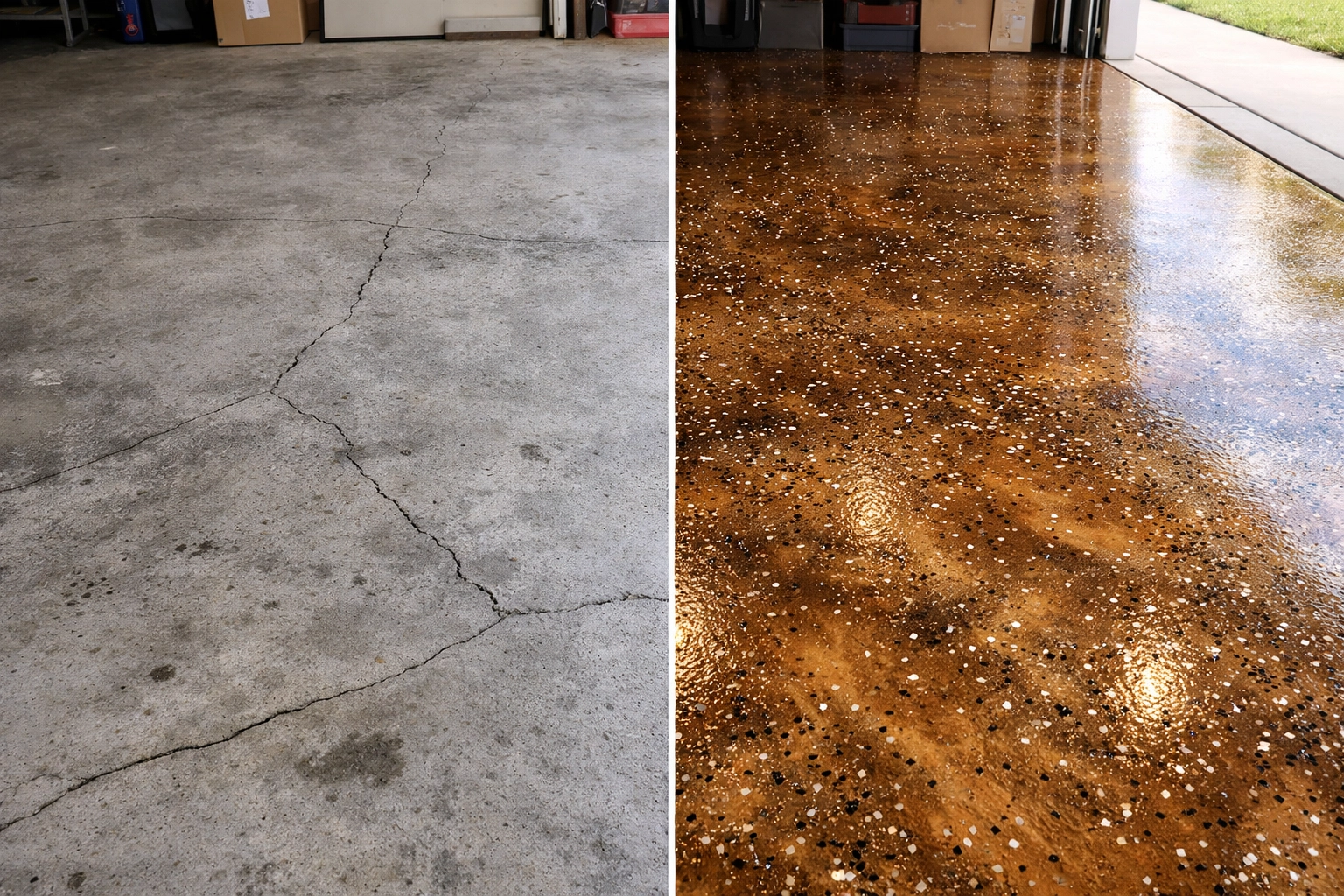
Want to see the difference between coating types? Check out our comparison of polyaspartic vs. epoxy to understand which option makes the most sense for your specific situation.
What About DIY Garage Floor Coating Kits?
Look, we get it. DIY kits are tempting. They're cheaper upfront, and the marketing makes it seem easy. "Just roll it on and you're done!"
But here's the honest truth: DIY kits are formulated differently than professional coatings. They're designed for ease of application by homeowners, not maximum durability in challenging climates. The solids content is lower. The adhesion isn't as strong. And there's zero quality control on your concrete prep work or moisture levels.
In Mississippi's humid climate, cutting corners on preparation or using lower-quality materials is basically setting yourself up for failure. You might get six months or a year of decent performance, but then the bubbling starts. The edges lift. The coating delaminates in sheets.
And then you're back to square one: except now you've got to pay a professional to remove the failed coating before installing a proper system. You end up spending more money and dealing with more hassle than if you'd just done it right the first time.
Maintaining Your Garage Floor Coating in Mississippi's Climate
Even the best garage floor coating needs some basic maintenance to perform its best. The good news? It's incredibly easy.
Regular sweeping keeps dirt and grit from grinding into the coating surface. A dust mop or shop vac once a week takes about five minutes.
Clean spills promptly. Garage floors see everything from motor oil to lawn fertilizer. While quality coatings resist most chemicals, it's still smart to wipe up spills when they happen rather than letting them sit.
Gentle cleaning works best. You don't need harsh chemicals. Warm water and a mild detergent (or a pH-neutral floor cleaner) will handle most cleaning jobs. A deck brush or mop is all you need.
Protect against impact damage. While polyaspartic and epoxy coatings are incredibly durable, dropping heavy tools or dragging sharp metal can still cause damage. Use furniture pads under tool chests and avoid dragging things across the floor when possible.
With proper maintenance, professional garage floor coatings in Mississippi typically last 15-20 years or more. That's not a typo. Two decades of beautiful, durable flooring.
The Bottom Line on Humidity and Garage Epoxy
So does Mississippi humidity destroy residential garage epoxy? Absolutely not: when the job is done right.
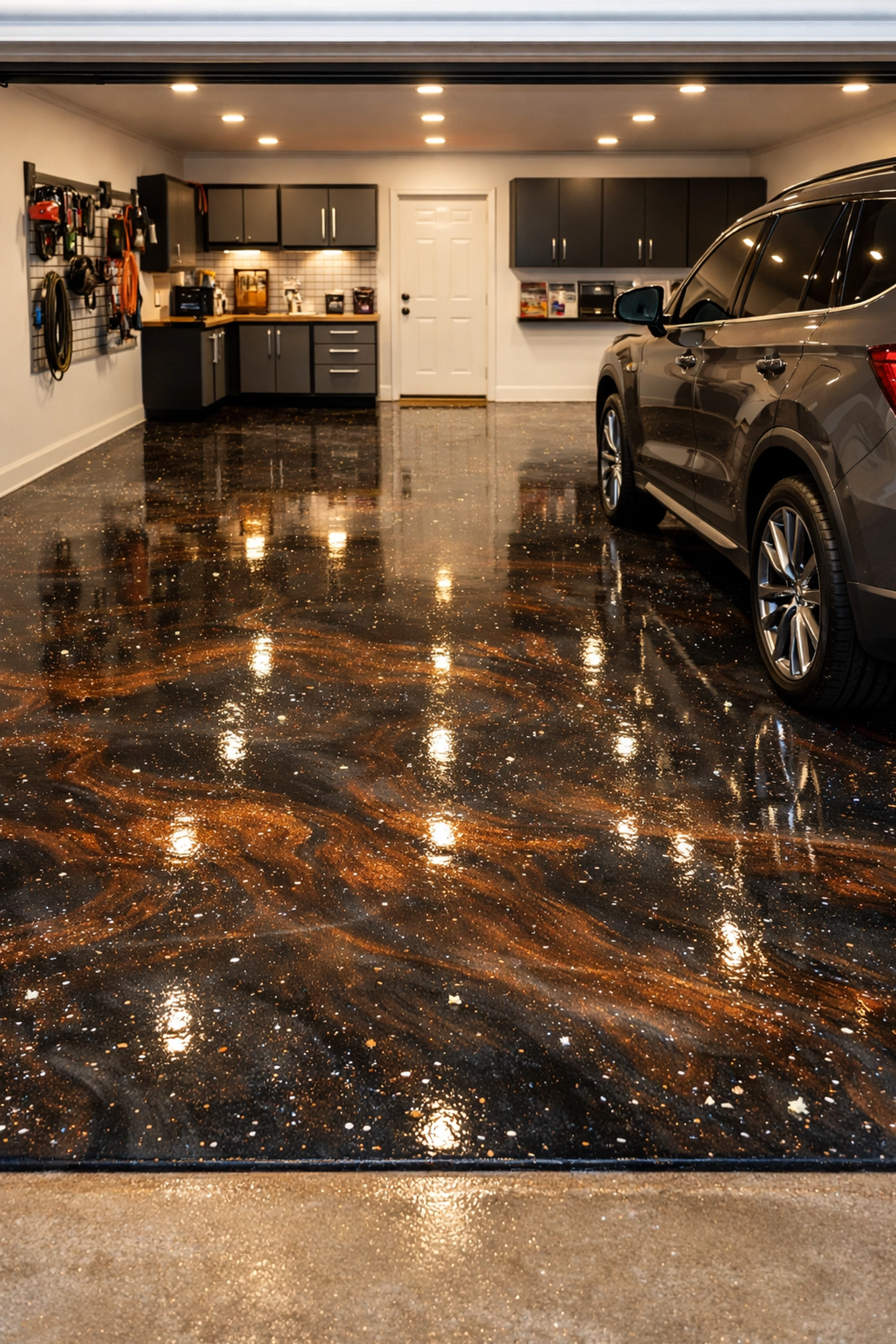
The humidity in the air isn't your enemy. Poor installation practices, inadequate surface preparation, and low-quality materials are what cause coating failures. When you combine professional preparation, proper moisture testing, high-quality coating materials, and expert installation, garage floor coatings perform beautifully in Central Mississippi's climate.
Whether you're in Madison, Brandon, Jackson, or anywhere else in the metro area, your garage deserves a floor that looks great and performs flawlessly for decades. That starts with choosing a professional installer who understands the unique challenges of our climate and has the expertise to overcome them.
Ready to get a garage floor that actually lasts? Contact Madison Coatings Company for a free consultation and moisture assessment. We'll walk you through the entire process, answer all your questions, and give you an honest evaluation of what your garage needs.
Because here's the thing: we're not interested in selling you a coating that fails in two years. We're building long-term relationships with homeowners who love their garage floors: and recommend us to their neighbors.
That's the Madison Coatings difference. Professional installation. Quality materials. Results that last.