
Polymer Flake Flooring Madison MS: Is It Really Better Than Plain Epoxy for Your Garage?
So you're standing in your garage, staring at that cracked, oil-stained concrete floor, and you've finally decided it's time for an upgrade. You've heard about epoxy coatings, but then someone mentioned "polymer flake flooring," and now you're wondering: what's the difference, and is it worth the extra cash?
Let's break it down in plain English. As concrete coating contractors who've transformed hundreds of Madison garages, we get this question almost daily. The short answer? Polymer flake flooring isn't necessarily "better" than plain epoxy, it's just different. And depending on what your garage looks like right now and how you want it to look, that difference might be exactly what you need.
What Exactly Is Polymer Flake Flooring?
Think of polymer flake flooring (also called "flake epoxy" or "chip flooring") as plain epoxy's cooler, more stylish cousin. The base is still a tough epoxy or polyaspartic coating, but while the coating is wet, we broadcast decorative vinyl flakes across the entire surface. These flakes come in dozens of colors and sizes, and you can mix-and-match to create a custom look.
After the flakes settle into the base coat, we apply a clear topcoat that seals everything in and gives you that showroom shine. The result? A garage floor that looks like it belongs in a magazine instead of just... a garage.
Plain epoxy, on the other hand, is exactly what it sounds like, a solid-color coating (usually gray or tan) with a high-gloss finish. Clean, professional, and no-frills.
The Biggest Difference: How They Handle Your Concrete's "Issues"
Here's where things get interesting for Madison homeowners. If you've lived in Mississippi for more than five minutes, you know our climate is tough on concrete. The humidity, temperature swings, and occasional freeze can leave your garage floor looking... well, less than perfect. Cracks, pitting, discoloration: it's all par for the course.
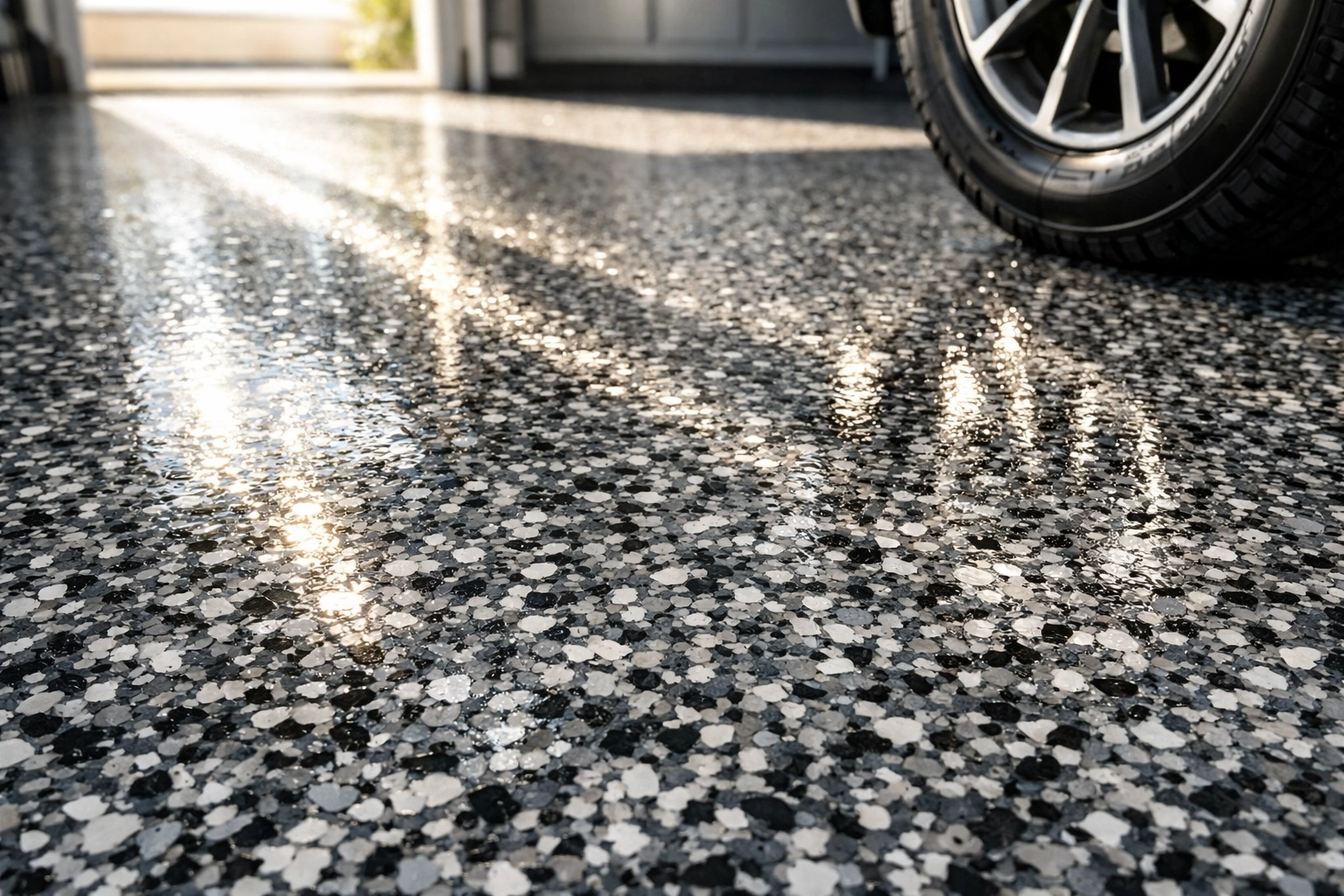
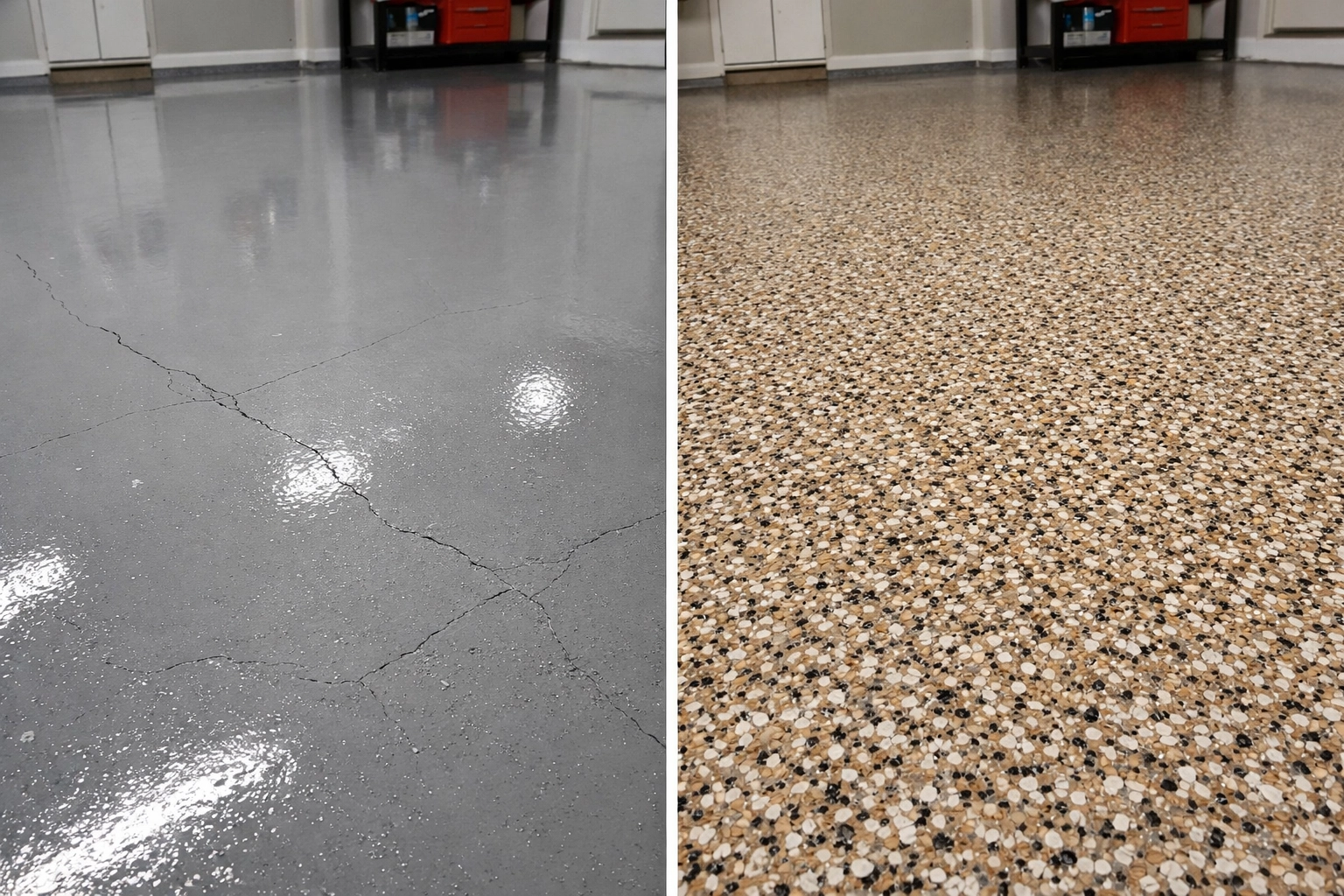
Polymer flake flooring is basically a master of disguise. Those decorative flakes hide a multitude of sins. Small cracks, uneven patches, old repair spots, and discoloration all disappear under the flake pattern. It's like applying a really good Instagram filter to your garage floor.
Plain epoxy? Not so forgiving. That glossy finish can actually highlight imperfections. Every little divot, every patched area, every variation in the concrete will show through. That means more prep work upfront: grinding, patching, leveling: to get the surface ready. And even then, if your concrete has significant issues, plain epoxy might not be your best bet.
For most Madison garages we work on (especially in older homes), the polymer flake system saves time on prep and delivers a more consistent-looking result.
Durability: Is One Tougher Than the Other?
This is where we can give you some good news: both systems are tough as nails.
Whether you choose polymer flake flooring or plain epoxy, you're getting a coating that can handle:
Hot tire pickup (those black marks your tires leave in summer)
Oil, antifreeze, and other automotive chemicals
Heavy impacts from dropped tools
Daily foot traffic and vehicle weight
Mississippi's humidity and temperature fluctuations
The flakes themselves don't add durability: they're decorative. The strength comes from the base coating and the topcoat. So if someone tries to sell you flake flooring as "stronger," that's not quite accurate. They're equally durable when installed correctly.
That said, polymer flake flooring Madison MS homeowners choose does have one practical advantage: if you ever get a scratch or small damage, it's way less noticeable in a multi-colored flake floor than it would be on a solid-color plain epoxy surface.
Slip-Resistance: A Real Consideration in Our Climate
Let's talk safety for a second. Madison sees its share of rain, and if you're like most folks, you've tracked water into your garage plenty of times. Maybe you rinse off your lawn equipment. Maybe the kids drip pool water everywhere.
Plain epoxy, when wet, can be slippery. That high-gloss finish looks amazing, but it doesn't offer much traction. You can add texture with an anti-slip additive, but that changes the smooth finish some people love.
Polymer flake flooring has built-in texture. Those flakes create tiny peaks and valleys across the surface that give your feet (and tires) something to grip. It's not rough or uncomfortable: you'd never notice it walking barefoot: but it makes a real difference when the floor is wet.
For families with kids, older homeowners, or anyone who works in their garage regularly, that extra traction is worth considering.
The Aesthetic Factor: Showroom vs. Workshop
This is where it really comes down to personal preference and how you use your garage.
Polymer flake flooring gives you options. Want a subtle, sophisticated look? We can do soft gray and white flakes. Want something bold that makes a statement? We've got vibrant color combinations. Want to match your home's color scheme? Easy. We've installed everything from sleek monochromatic designs to colorful "confetti" patterns, and our gallery shows just how varied the looks can be.
Plain epoxy is clean, modern, and professional. If you prefer minimalism or you're using your garage as an actual workshop where function matters more than form, plain epoxy delivers exactly what you need without any visual distraction.
There's no wrong choice here: it's about what makes you happy every time you pull into your garage.

Cost: What's the Real Difference?
Let's be straight with you: polymer flake flooring costs more than plain epoxy. You're paying for:
The decorative flakes themselves
The extra labor to broadcast and work them into the coating
More material overall (base coat, flakes, and topcoat)
But here's the thing: it's not dramatically more expensive, and the prep savings we mentioned earlier can offset some of that cost difference. Plus, you're getting a more customized look that typically adds more perceived value to your home if you ever sell.
Plain epoxy is the budget-friendly option, no question. If you've got a tight budget or you genuinely prefer the simple look, it's a solid choice that'll still protect your concrete for years.
How Each Handles Madison's Climate
Mississippi's weather is hard on everything, and your garage floor is no exception. We've got:
Summer heat that can make your garage feel like an oven
High humidity year-round
Occasional winter freezes
Heavy rain and potential flooding
Both plain epoxy and polymer flake flooring handle these conditions well when properly installed. The key is using the right coating system for our climate: not all epoxies are created equal.
At Madison Coatings Company, we've learned what works in our specific area. We use coatings that can flex with temperature changes (concrete expands and contracts), resist moisture penetration, and hold up to UV exposure if your garage gets direct sunlight.
One advantage of polymer flake systems: if you ever get minor etching or wear from exposure, it's far less visible than it would be on solid-color epoxy.
Making the Right Choice for Your Garage
So, is polymer flake flooring Madison MS homeowners should choose over plain epoxy? Here's how we'd guide you:
Choose polymer flake flooring if:
Your concrete has visible imperfections you want to hide
You want a custom, decorative look
Slip-resistance is a priority
You entertain in your garage or want it to be a "showcase" space
You want scratches and wear to be less noticeable over time
Choose plain epoxy if:
You're working with a tighter budget
Your concrete is already in great condition
You prefer a minimalist, clean aesthetic
You're primarily focused on protection over appearance
You're coating a workshop or utility space
What About Installation?
Both systems need proper surface prep to perform well: that's non-negotiable. The difference is that polymer flake flooring is more forgiving of minor imperfections, so we can sometimes complete the prep faster.
Installation time is similar for both: typically 1-2 days depending on your garage size and the coating system used. If we're using polyaspartic coatings (which we often recommend for both plain and flake systems), you can park on your floor the next day. Traditional epoxy takes longer to cure.
Want to see what different options would look like in your specific garage? Our visualizer tool lets you play around with colors and styles before making a decision.
The Bottom Line
Polymer flake flooring isn't "better" than plain epoxy in terms of durability or protection: they're equals there. Where it shines is in aesthetics, imperfection concealment, and slip-resistance. Whether that matters to you depends on your garage's current condition, your budget, and your personal preferences.
Most Madison homeowners we work with end up choosing the polymer flake system, simply because the extra visual appeal and forgiving nature make it worth the modest price increase. But we've installed plenty of beautiful plain epoxy floors too, and those customers are just as happy.
The real key is working with a contractor who knows what they're doing and uses quality materials designed for our climate. Cut-rate garage floor coatings: whether flake or plain: are going to fail regardless of which system you choose.
Ready to upgrade your garage floor? Get in touch with us and we'll walk you through exactly what would work best for your specific situation. We'll shoot straight with you about what you need: no upselling, no pressure, just honest advice from contractors who've been doing this for years in the Madison area.
Your garage floor takes a beating. Give it a coating that can handle it: and look good doing it.