
Commercial Floor Coatings 101: A Business Owner's Guide to Durable, Custom Solutions

Your commercial floor takes a beating every single day. Foot traffic, heavy equipment, chemical spills, and constant cleaning all wear down unprotected concrete faster than most business owners realize. That cracked, stained floor isn't just an eyesore: it's costing you money in repairs, safety incidents, and lost customer confidence.
Commercial floor coatings solve these problems by creating a protective barrier that transforms ordinary concrete into a durable, professional-looking surface built to handle whatever your business throws at it. Whether you run a warehouse, retail store, automotive shop, or healthcare facility, the right coating system can extend your floor's lifespan by decades while reducing maintenance headaches.
This guide breaks down everything you need to know about commercial floor coatings: from the different types available to choosing the perfect solution for your specific industry needs.
Why Your Business Needs Professional Floor Coatings
Let's be honest: bare concrete floors weren't designed for modern commercial environments. They're porous, prone to staining, and deteriorate quickly under heavy use. Here's why investing in a professional coating system makes smart business sense.
Safety First
Slip-and-fall accidents are among the leading causes of workplace injuries: and they're expensive. Commercial floor coatings can include slip-resistant additives that provide better traction, even when floors are wet. For businesses in food service, manufacturing, or any environment where spills are common, this safety feature alone can prevent costly workers' compensation claims and liability issues.
Easier Maintenance and Sanitation
Uncoated concrete absorbs liquids, oils, and bacteria like a sponge. Once something soaks in, it's nearly impossible to remove completely. Coated floors feature non-porous surfaces that prevent absorption, making cleaning faster and more effective. For healthcare facilities, restaurants, and food processing plants where sanitation is critical, this property isn't optional: it's essential.

Long-Term Cost Savings
Think of floor coatings as insurance for your concrete. By protecting the underlying substrate from damage, you're preventing expensive repairs and replacement down the road. A quality commercial coating system can last 10-20 years with proper maintenance, compared to bare concrete that may need significant repairs within just a few years of heavy use.
Professional Appearance
Your floor is one of the first things customers and clients notice when they walk through your door. A polished, professional-looking floor communicates that you care about details and run a quality operation. Whether you choose a sleek solid color, decorative flake system, or high-gloss metallic finish, the right coating elevates your entire space.
Types of Commercial Floor Coatings
Not all coatings are created equal. Each type offers different benefits, and understanding your options helps you make the best choice for your specific situation.
Epoxy Floor Coatings
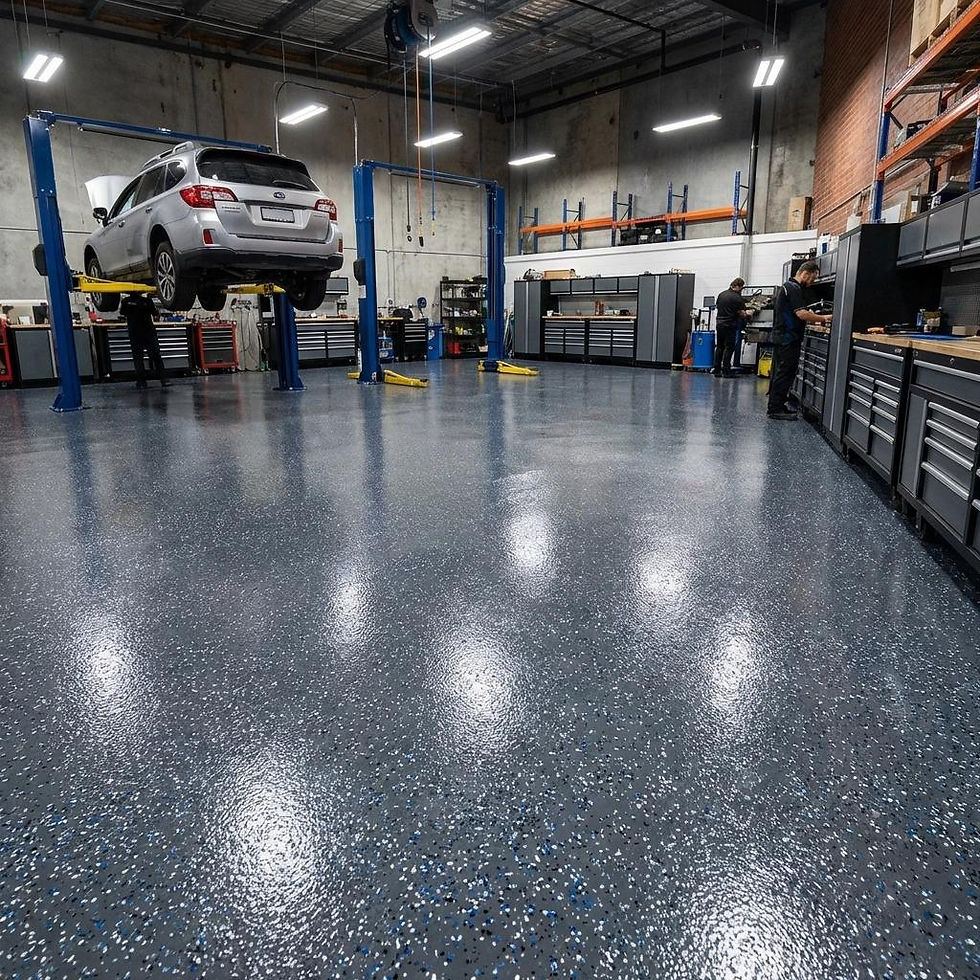
Epoxy remains the most popular choice for commercial applications, and for good reason. This two part system creates an incredibly hard, durable surface that resists chemicals, impacts, and heavy foot traffic. Epoxy floors are ideal for:
• Warehouses and distribution centers
• Automotive shops and service bays
• Manufacturing facilities
• Retail showrooms
• Commercial garages
Epoxy coatings come in virtually unlimited colors and can incorporate decorative flakes, quartz aggregates, or custom patterns. The high-gloss finish reflects light, brightening your space and potentially reducing lighting costs.
Polyurethane Coatings
Polyurethane offers excellent flexibility and UV stability, making it a strong choice for areas exposed to sunlight or temperature fluctuations. While typically applied as a topcoat over epoxy, polyurethane adds an extra layer of protection against scratches and abrasion. Food service facilities often prefer polyurethane for its resistance to thermal shock from hot water and steam cleaning.
Polyaspartic Coatings
If downtime is your biggest concern, polyaspartic coatings deserve serious consideration. These fast curing systems can be applied and returned to service in as little as 24 hours: compared to several days for traditional epoxy. Polyaspartic coatings offer:
• Exceptional UV stability (won't yellow over time)
• Excellent chemical resistance
• High abrasion resistance
• Flexible application in extreme temperatures
The trade-off? Polyaspartic systems typically cost more than standard epoxy, and the fast cure time requires experienced installers who can work quickly and precisely.
Concrete Polishing
While technically not a coating, polished concrete deserves mention as a popular commercial flooring option. This process grinds and polishes the existing concrete surface to create a glossy, durable fin ish without adding a separate coating layer. Polished concrete works well in retail environments, showrooms, and office spaces where a modern, minimalist aesthetic is desired.
Choosing the Right Coating for Your Industry
The "best" commercial floor coating depends entirely on your specific environment and needs. Here's how different industries typically approach the decision.
Automotive and Industrial
Heavy machinery, oil spills, and chemical exposure demand maximum durability. Epoxy systems with chemical-resistant topcoats handle these harsh conditions best. Consider incorporating anti-fatigue properties if employees stand for extended periods, and always include slip-resistant additives in service areas.

Retail and Showrooms
Appearance matters most in customer-facing environments. Decorative epoxy flake systems, metallic finishes, or polished concrete create visually striking floors that enhance your brand. High-gloss finishes maximize light reflection and create an upscale feel.
Healthcare and Food Service
Sanitation requirements drive coating choices in these industries. Look for seamless, non-porous systems that meet health code requirements and can withstand frequent cleaning with harsh chemicals. Coved bases: where the coating extends up the wall several inches: eliminate dirt-collecting seams at floor edges.
Warehouses and Distribution
Durability and safety trump aesthetics in warehouse environments. Impact-resistant epoxy systems handle heavy loads, while clearly marked traffic lanes and safety zones improve workflow efficiency. Anti-slip additives in loading dock areas reduce accident risks.
The Installation Process: What to Expect
Professional installation is crucial for long-lasting results. Here's what the process typically looks like.
Surface Preparation
This step makes or breaks your coating system. Professional installers will thoroughly clean your existing concrete, repair cracks and damage, and mechanically prepare the surface through diamond grinding or shot blasting. Proper preparation ensures the coating bonds securely to the substrate.
Application
Depending on the system chosen, application may involve multiple coats applied over several days. Each layer must cure properly before the next is applied. Temperature and humidity affect cure times, so experienced installers monitor conditions closely throughout the process.
Cure Time
Most epoxy systems require 24-72 hours before light foot traffic and up to a week before full use. Polyaspartic systems cure much faster, often allowing return to service within 24 hours. Your installer should provide specific timelines based on your chosen system and facility conditions.
Maintaining Your Investment
A quality commercial floor coating requires minimal maintenance to look great for years. Daily dust mopping removes abrasive particles that can scratch the surface over time. Weekly wet mopping with a neutral pH cleaner keeps floors sanitary without damaging the coating. Address spills promptly: while coated floors resist staining, some chemicals can damage the surface if left too long.
Avoid harsh cleaners, especially those containing citrus or vinegar, which can break down coating chemistry over time. Your installer should provide specific maintenance recommendations for your particular system.

Making Your Decision
Choosing the right commercial floor coating involves balancing durability requirements, aesthetic preferences, budget constraints, and timeline considerations. A professional assessment of your facility helps identify the optimal solution for your specific needs.
At Madison Coatings Company, we specialize in helping business owners navigate these decisions. Our team evaluates your facility, discusses your priorities, and recommends coating systems that deliver lasting value. Check out our gallery to see examples of our commercial work, or contact us to schedule a consultation.
Your floor is the foundation of your business environment. Invest in protecting it properly, and it will serve you well for decades to come.