
7 Mistakes You're Making with Garage Floor Coatings in Jackson MS (and How to Fix Them)
- Feb 23
- 6 min read
Let's be real: garage floor coating mistakes in Jackson MS are everywhere. You've probably seen them: peeling epoxy after one summer, bubbling floors that look worse than the bare concrete, or those sad DIY jobs where the coating literally pulled up when someone parked on it.
Here's the thing: most garage floor coating failures aren't about bad luck. They're about bad prep work, cheap materials, and shortcuts that seem fine until Mississippi's heat and humidity have their way with your floor.
Whether you're planning a DIY project or vetting contractors for your garage floor coating in Jackson MS, understanding these mistakes could save you thousands of dollars and a ton of frustration.
Mistake #1: Skipping Proper Diamond Grinding (Or Using Acid Etching Instead)
This is the biggest mistake we see, hands down. Most big-box store epoxy kits tell you to just "etch" your concrete with muriatic acid and call it good. That might work in a perfect world with brand-new concrete, but in Jackson? Your garage floor has years of oil stains, tire residue, and that smooth-as-glass finish that concrete develops over time.
Why It Fails: Acid etching creates an inconsistent surface profile. It might open up some pores in the concrete, but it doesn't remove contaminants or create the deep mechanical bond that professional coatings need. The coating ends up adhering to dirt and oil instead of concrete.
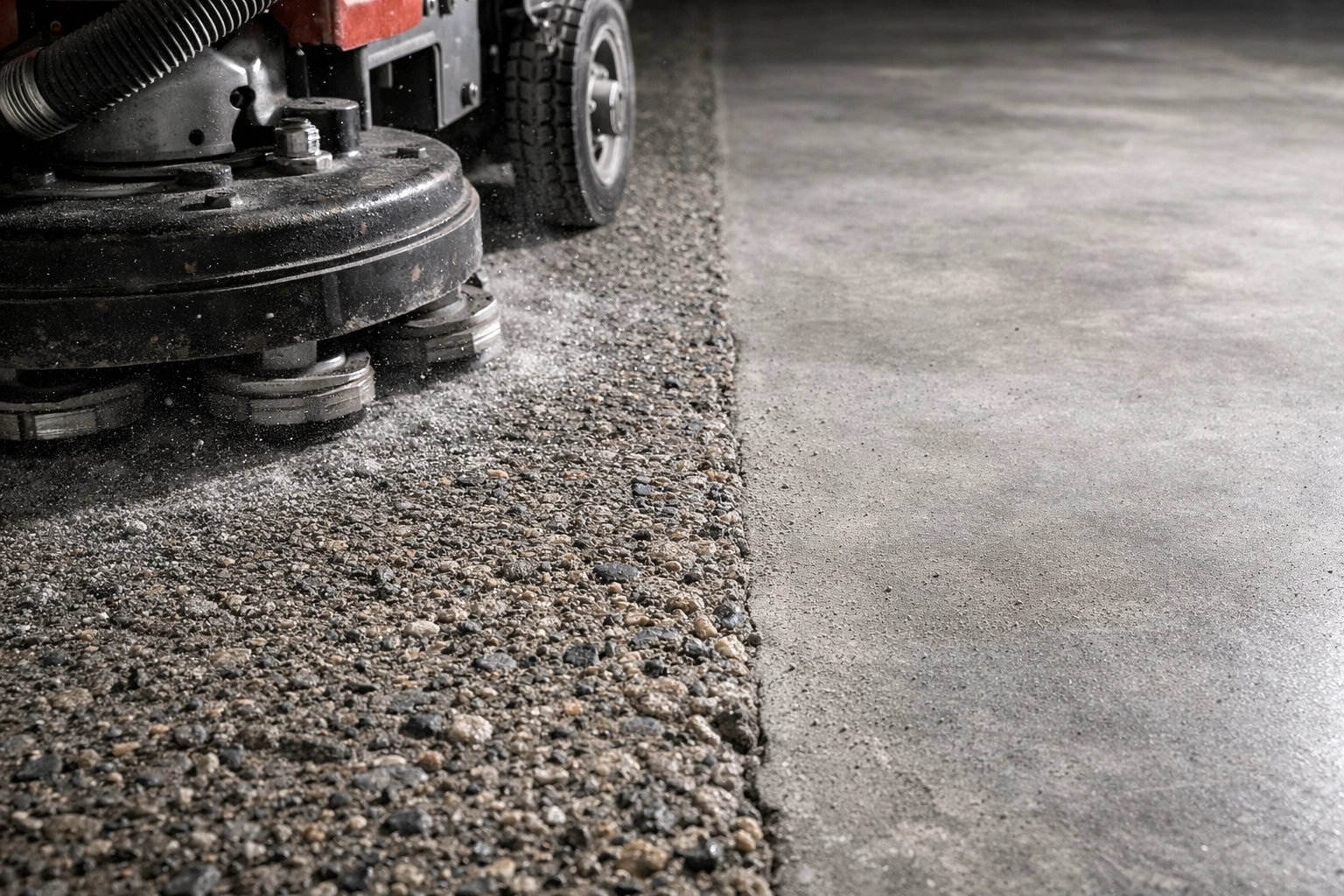
The Fix: Professional diamond grinding removes the top layer of concrete, exposes the aggregate, and creates a uniform texture for maximum adhesion. At Madison Coatings Company, we use commercial-grade diamond grinders on every single job: not because we like making noise, but because it's the only way to guarantee your coating will actually bond to the slab for the long haul.
Mistake #2: Ignoring Mississippi's Concrete Moisture Problem
Here's something they don't tell you at Home Depot: Jackson sits in one of the most humid climates in the country, and your concrete slab is basically a giant sponge. Even if the surface looks bone-dry, moisture can be trapped underneath, trying to escape through that concrete.
Why It Fails: When moisture tries to escape through a sealed epoxy coating, it brings salts and minerals with it. This creates those white, chalky spots (efflorescence) and causes the coating to bubble, blister, and eventually peel off in sheets.
The Fix: Before any professional garage floor coating in Jackson MS goes down, proper moisture testing is non-negotiable. We use calcium chloride tests to measure the moisture vapor emission rate. If there's too much moisture, we address it before coating: not after you've already invested in a system that's doomed to fail.
Mistake #3: Using Those Cheap Big-Box Store Epoxy Kits
Look, we get it. Those $50-$100 garage floor kits at Lowe's or Home Depot are tempting. The box shows a gorgeous metallic floor, and it promises professional results in a weekend. But here's the truth most people learn the hard way: you're getting what you pay for.
Why It Fails: Store-bought epoxy kits are typically water-based or very low-solids formulations (30-40% solids at best). They're thin, they scratch easily, and they absolutely cannot handle hot tire pickup. When your car sits in the Jackson summer sun and you pull into the garage, those warm tires will literally pull the coating right off your floor.
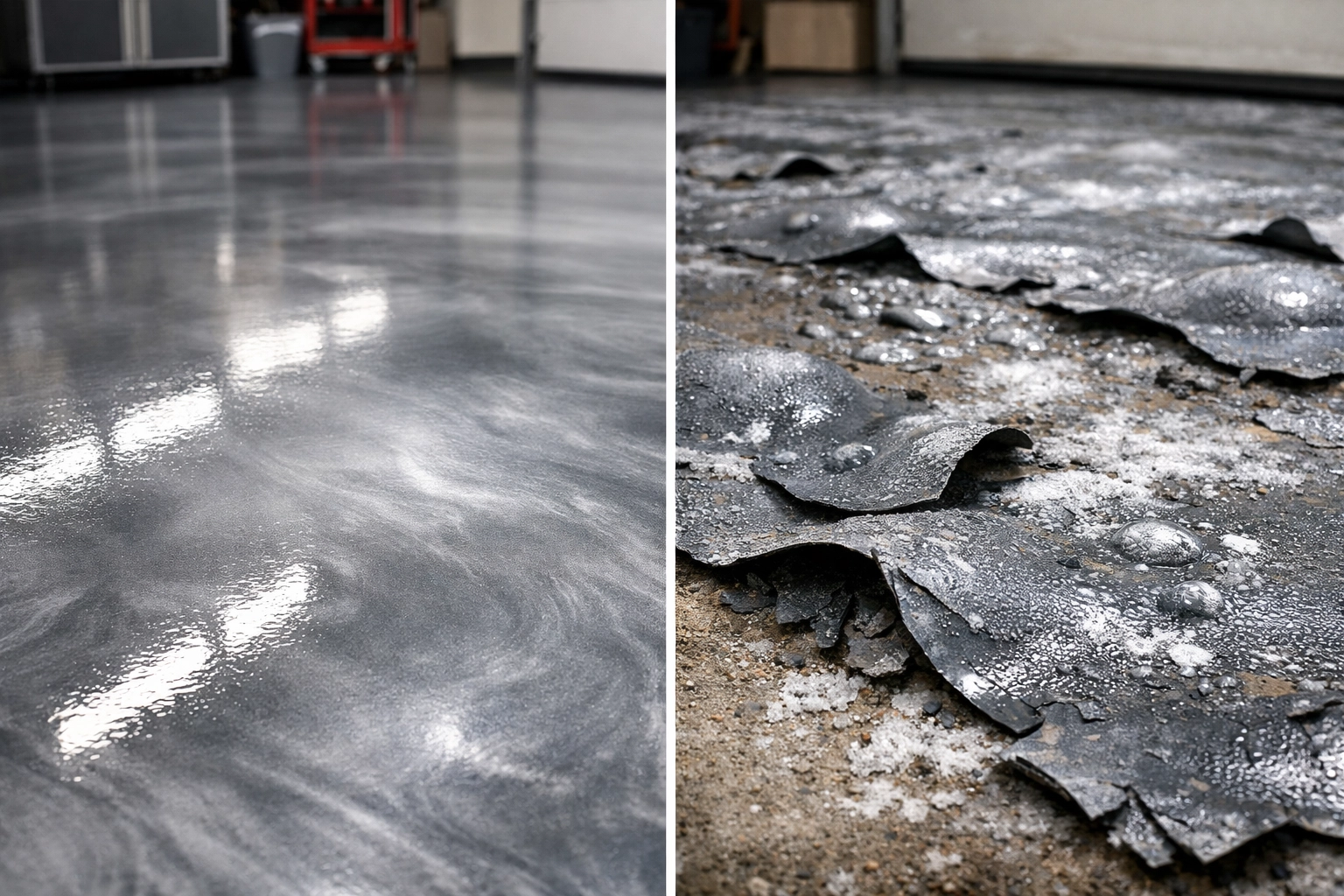
The Fix: Professional-grade polyaspartic and epoxy systems use 100% solids formulations that are exponentially thicker and more durable. At Madison Coatings Company, our systems are designed to handle vehicle traffic, impacts, chemicals, and the temperature swings we experience here in Central Mississippi. It's a completely different product category.
Mistake #4: Ignoring Proper Concrete Floor Preparation Steps
Surface prep isn't just grinding. It's the entire process: crack repair, joint filling, oil stain remediation, and creating a perfectly clean substrate. We've seen contractors who'll grind the floor but skip everything else.
Why It Fails: Cracks will telegraph through any coating. Oil stains prevent adhesion. Dust left behind from grinding creates a barrier between concrete and coating. One contaminated spot can cause a failure that spreads across your entire floor.
The Fix: A proper concrete floor preparation protocol includes:
Crack and joint repair with flexible fillers
Degreasing for oil stains
Diamond grinding to ICRI CSP 2-3 profile
Complete dust removal with industrial vacuums
Final solvent wipe-down
This is why professional installations take time. We're not cutting corners: we're building a foundation that'll last 15+ years.
Mistake #5: Skipping the Topcoat (Or Using the Wrong One)
Some contractors will sell you on a single-coat system or tell you the epoxy basecoat is "good enough" without a protective topcoat. This is especially common with the "cheapest bid" contractors you'll find.
Why It Fails: Epoxy is strong, but it's not UV-stable and it can yellow over time from sunlight coming through your garage door. Without a proper topcoat, your floor is also vulnerable to hot tire marks, abrasion from grit and sand, and chemical staining. The difference between a coated and uncoated system is night and day.
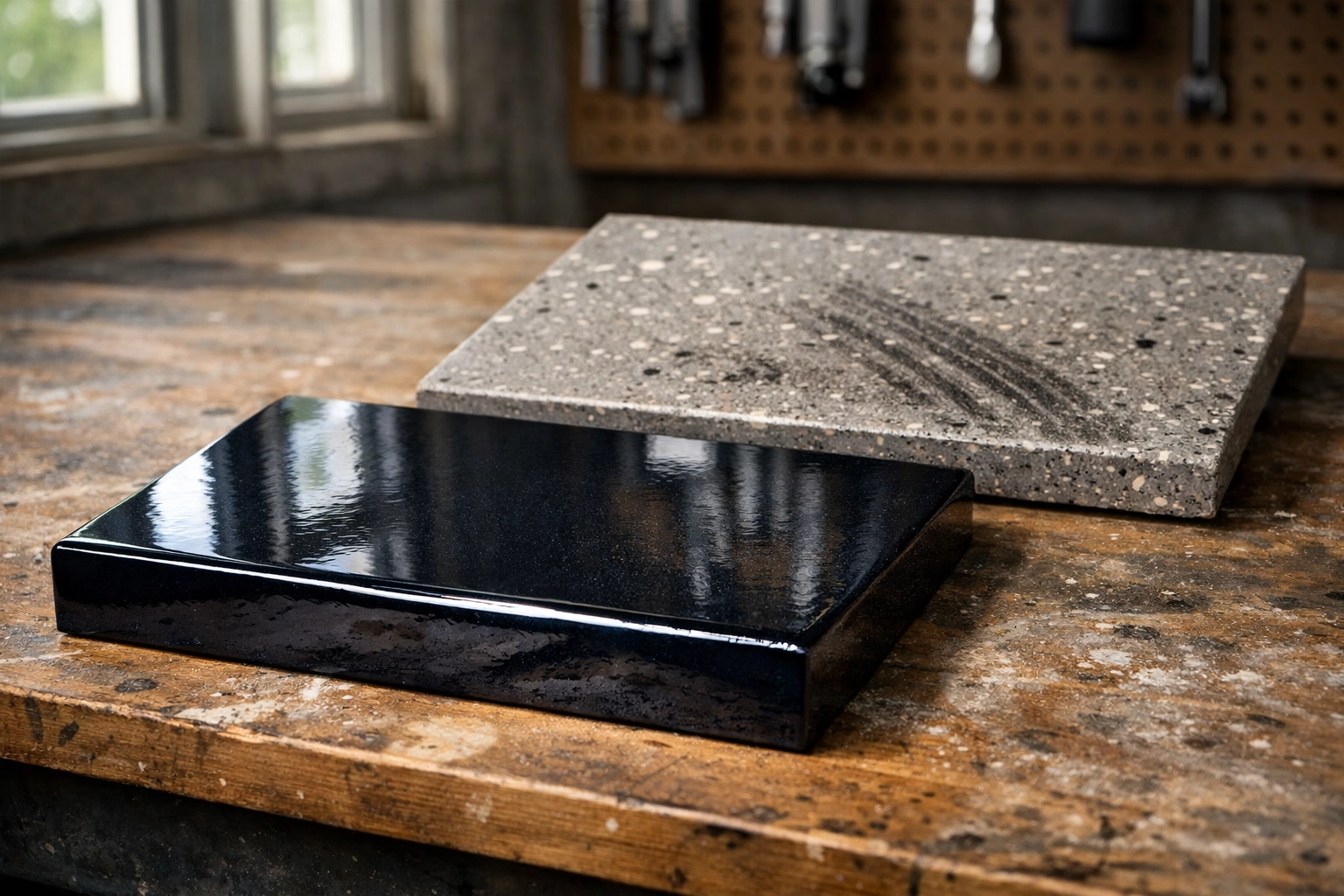
The Fix: Every professional garage floor coating system should include a clear polyurethane or polyaspartic topcoat. These create a sacrificial wear layer that protects your color coat, resists UV yellowing, and makes the floor easier to clean. Our polyaspartic topcoats also cure incredibly fast, which means you can park on your floor in 24 hours instead of waiting 3-7 days with traditional epoxy.
Mistake #6: Applying Coatings in Jackson's Extreme Weather Conditions
Mississippi weather is brutal on coatings: not just the finished floor, but during installation too. We've seen DIY jobs go wrong because someone decided to coat their garage on a 95°F July afternoon with 80% humidity.
Why It Fails: Epoxy cures through a chemical reaction that's highly temperature-sensitive. Too hot, and it flashes off before it can bond properly. Too cold, and it won't cure at all. High humidity causes blushing (a cloudy film) and can trap moisture in the coating. Too low humidity causes rapid solvent evaporation and pinholing.
The Fix: Professional installers monitor temperature and humidity conditions constantly. We schedule installations during optimal weather windows and sometimes work early morning or evening hours to avoid temperature extremes. We also use climate-appropriate product formulations: what works in Arizona might not work in Jackson MS.
Mistake #7: Mixing or Applying Coating Incorrectly
This is where a lot of DIY projects fall apart. Two-part epoxy systems require precise mixing ratios, proper mixing technique, and consistent application thickness. Miss any of these, and you're in trouble.
Why It Fails: Under-mixed coating won't cure properly, leaving soft spots that never harden. Over-mixing introduces air bubbles. Applying coating too thin means it won't have the strength to handle traffic. Applying it too thick can cause cracking as it cures. And if you mix up more than you can apply in the working time (pot life), you'll watch your expensive material harden in the bucket.
The Fix: This is honestly where professional experience matters most. Our installation teams have done hundreds of floors. They know exactly how much material to mix, how quickly to work, what mil thickness to target, and how to maintain a wet edge so you don't see roller marks or overlaps. These are skills you can't learn from a YouTube video.
How Madison Coatings Company Gets It Right Every Time
Here's our process for every garage floor coating in Jackson MS:
Comprehensive floor assessment – We check for moisture, structural issues, and existing coatings
Professional diamond grinding – Creating the perfect surface profile for adhesion
Crack and joint repair – Preventing future problems before they start
Multiple coat system – Primer, basecoat, decorative elements, and protective topcoat
Quality materials – 100% solids epoxy and polyaspartic systems, not store-bought kits
Climate monitoring – Only installing in optimal conditions
Warranty backing – Because we stand behind our work
The result? Floors that actually last. Floors that handle Jackson's humidity, summer heat, and daily wear without peeling, bubbling, or yellowing.
Ready for a Garage Floor That's Done Right?
If you're tired of seeing epoxy floor mistakes or you're ready to invest in a professional garage floor coating in Jackson MS that'll actually last, we should talk.
At Madison Coatings Company, we've built our reputation on doing what other contractors skip: proper concrete floor preparation, professional-grade materials, and installation techniques that create floors built to last decades, not just years.
Get in touch with us today for a free consultation. We'll assess your garage, explain exactly what your floor needs, and show you why cutting corners costs more in the long run.
Your garage deserves better than big-box epoxy and shortcuts. Let's do it right the first time.